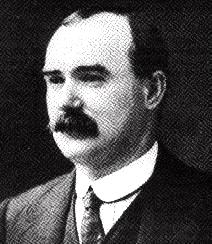
Politicians from the north of Ireland will for take part in Dail proceedings for the first time today.
Westminster MPs from the North have been invited to takepart in a new committee of the Dail set up to help implementthe Belfast Agreement.While unionists are not expected to accept seats on thecommittee, nationalists have welcomed it as a further stepin developing all-Ireland relations.
Northern Ireland representatives to the committee will include the SDLP's south Belfast MP Alastair McDonnell,south Down MP Eddie McGrady, Sinn Fein's Fermanagh/southTyrone MP Michelle Gildernew and Pat Doherty, MP for westTyrone.They can take part in debates but will not have a right tovote or to move motions and amendments.
Sinn Féin's Dail Group leader Caoimhghin O Caolain said theCommittee was "a very welcome and significant step forward".
Thursday, 22 November 2007

Friday, 9 November 2007
Pat Doherty writes for on the next tests for the peace process

Pat Doherty MP, Vice President, Sinn Féin on the next challenges for the peace process in Socialist Campaign Group News.
Next tests for the peace process
There has been huge political progress in the north of Ireland this year. We now have local politicians taking the tough decisions and working relationships people did not believe could be sustained.
We have renewed momentum in working together as equals, both in the executive and the Assembly, and also across the island of Ireland, where new partnerships are emerging; in developing infrastructure, and in health and education. There is an appetite for even greater co-operation. Many in the business sector are leading the debate on economic harmonisation.
But it must be about much more. Already issues such as a new air hub in Belfast has brought up matters such as workers rights and particularly pay and conditions across Ireland as a whole and the need for balanced regional development.
There remains huge levels of poverty, disadvantage, discrimination and under-investment. We need to be able to do more. Some of this will come through the deepening of relationships between the north and south and there is already substantial financial assistance from both Dublin and Europe to tackle the legacy of partition, conflict and under-funding.
Sinn Féin has led the debate on two key issues for the future regeneration of the six counties and also the deeply neglected North West region. We have argued that greater tax varying powers need to be transferred to the Assembly executive, in terms of corporation tax and economic growth, and also to deliver socio-economic justice.
We have also recognised the real potential of handing over former British Army and RUC sites in order to drive forward local regeneration, support social and affordable housing and build community infrastructure.There are other important challenges for local politicians. Deeply ingrained sectarian tensions and distrust remains. There is still a failure to get the required momentum on human rights, although we do now have a Bill of Rights Forum. Equality must underpin all aspects of good governance.
There are challenges in ensuring support for all victims of the conflict and deal with the past. Following the flawed and partisan nature of the first appointment of a Victims’ Commissioner we now have a new process underway free from the interventions of the Northern Ireland Office.
The British government has still to deal with its responsibility for collusion and frustrating closure for families whose loved ones were murdered. The use of legislation to undermine inquiries into collusion represents a failure of political leadership.One fundamental issue is the transfer of policing and justice powers next year. This is no longer a question of if, but of how and when. Given the experience of policing, and particularly the malign role of the political policing of MI5 and British government intervention, this represents the next big test. Sinn Féin has demonstrated our commitment to the new start to policing. This is huge test for the British government, for unionism and for the policing structures themselves.
It is progress that we have firewalled civic policing from MI5 and protected democratic accountability structures in relation to the PSNI. But it is still early days. There are still some with a destabilising agenda. We need further accountability and part of this is the devolution of policing and justice powers.
There has been enormous progress. Difficult challenges lie ahead, but also opportunities for greater change.

Wednesday, 7 November 2007
Lloyd George statue "a disgrace"
 Congratulations to John Pilger and Harold Pinter for branding the new statue of former Liberal Prime Minister, David Lloyd George, "a disgrace."
Their letter to the Telegraph correctly cites his record of ordering British troops to bomb Afghanistan, Egypt, Iran and Iraq during the First World War, something Liberals today are eager to forget.
But more should be said of the role he played in Ireland. As Prime Minister from December 1916 to 1922 he led Britain's role in repressing those struggling for liberty in Ireland and was the Prime Minister who oversaw the country's partition.
Not only did he attempt to force conscripion on Ireland, but during the War of Independence, it was he who routinely locked up Ireland's elected MPs who refused to recognise British rule, and it was he who recruited and sent the Auxiliary Cadets and the Black and Tans who devastated people and their homes in a brutal effort to suppress the struggle for freedom.
And he should perhaps be best remembered by his statement to the Irish people in 1921 that they should accept partition or face "immediate and terrible war."
David Lloyd George - a liberal? Perhaps a liberal use of the term. An imperialist, and a particularly ruthless one at that, is more fitting.
Wednesday, 31 October 2007

Tuesday, 30 October 2007
Six County MPs to attend Dail Committees
 Northern Ireland's 18 MPs are to be allowed to attend committee meetings in the Dublin parliament whenever they want for the first time. One of these is the newly-formed Joint Committee on the Implementation of the Good Friday Agreement. MPs will not be allowed to vote. The privilege is likely to be used by nationalists but ignored by unionists.
SDLP leader Mark Durkan said attending committees was "an additional means of engagement on a north/south basis". He warned it should be no substitute for a north/south parliamentary forum, as envisaged by the Agreement.
Oireachtas committees are cross-party parliamentary bodies made up of Dail and Seanad members. They shadow various departments and deal with a range of investigations to advise the government.
Sinn Fein has made longstanding calls for speaking rights for Westminster MPs in the Dail and Seanad.
This was backed by an Oireachtas committee in 2002, but the process to implement this has stalled.
Sinn Féin Dáil leader Caoimhghín Ó Caoláin TD has welcomed the establishment of the Joint Committee on the Implementation of the Good Friday Agreement and has noted his party's intention to build on this initial step towards 32 county representation in the Oireachtas. Ó Caoláin said: "The establishment of the Joint Committee on the Implementation of the Good Friday Agreement is welcome. That said, the establishment of the Committee represents a step forward. The participation of MPs from the Six Counties will give the Committee an essential All-Ireland character."
However he added, "We have called for representation in the Dáil for citizens in the Six Counties. We maintain this call and we do not see the new Joint Committee on the Implementation of the Good Friday Agreement as a substitute for Six-County representation in the Dáil."
Wednesday, 12 September 2007
Gerry Adams book launch in London
 The President of Sinn Féin discusses the last two years of momentous political developments in Ireland, Spain and the Middle East as we launch his new book An Irish Eye.
6pm, Thursday 20th September
The Apollo Theatre, Shaftesbury Avenue, London WC1
ALSO
1-2pm, Friday 21st September
Gerry Adams will sign copies of An Irish Eye at Waterstones, Gower Street, London WC1 Free entry
Sunday, 9 September 2007
New hearings into killings by RUC unit
 New hearings are to be held into six deaths at the centre of an alleged police shoot-to-kill policy in Northern Ireland 25 years ago. Coroner John Leckey confirmed yesterday he will begin examining the cases in Belfast next month. They involve the shooting of three IRA men, Seán Burns, Gervaise McKerr and Eugene Toman, INLA suspects Peter Grew and Roderick Carroll, and Catholic teenager Michael Tighe.
The killings, by a special RUC unit, provoked controversy and led to former Greater Manchester Police deputy chief constable John Stalker being brought in to investigate. But his report was never published and demands for a fresh inquiry into the Burns, McKerr and Toman deaths have been resisted. The IRA men died when the car they were travelling in was fired on near Lurgan, Co Armagh in November 1982.
Earlier inquests into the killings were abandoned amid legal wrangling and deepening controversy. Peter Madden, solicitor for the men's families, claimed yesterday police officers involved could be brought to give evidence. He said:
"The surviving RUC men responsible for firing more than 100 rounds at the car containing the deceased will now be compellable witnesses at the inquest and shall be cross-examined by the families' lawyers. The coroner's verdict can make explicit factual findings pointing towards a conclusion that criminal or civil responsibility exists."
Mr Leckey's decision to hold preliminary hearings has reignited demands for full publication of the Stalker dossier. He also probed events surrounding the shooting of Michael Tighe (17) at a hayshed near Craigavon, Co Armagh, the same month. IRA explosives had been stored there, but Tighe was not connected to the organisation. In December 1982, Grew and Carroll were shot dead outside Armagh after being followed across the Border by a police surveillance unit.
Sinn Féin MLA John O'Dowd demanded full disclosure at the hearings in a bid to close to the cases. He said:
"It's 25 years on and the families of these men just want to know the truth. They have also called for the publication of the Stalker report. The British government and Northern Ireland Chief Constable Hugh Orde can move on if they publish it and people can examine what happened then. It will give the same closure to them." He added: "I certainly hope that no barriers will be placed in the way of John Leckey this time and I urge Hugh Orde not to sanction public immunity certificates as this would not be appropriate."
Wednesday, 5 September 2007

Leading unionist says Irish unity is not "unthinkable"
The former head of the "Northern Ireland Civil Service", Ken Bloomfield, has said some form of Irish unity is not unthinkable in principle. The former Victims Commissioner, currently involved with the Independent Commission for the Location of Victims' Remains, said Irish unity should be thought of as a possible or potential contract between distinct groups of people "with all the cards on the table." It would not be a single step but a process with a "modest beginning and no predetermined end," he told the gathering of the 40th anniversary Merriman summer school.
"So it is that I do not find the idea of some form of Irish unity or closer association - almost certainly after my time - in any way unthinkable in principle," Sir Kenneth, who was secretary to the 1974 Sunningdale power-sharing government, said. "But what is conceivably acceptable in principle would have to be mutually acceptable in practice. As I grow older, I care less which flag is flown and which anthem is played where I live."
He said he would find it difficult to bear "with any sense of self respect" any relapse into a period of " that parody of democratic government, direct rule". "Far sighted politicians, economists and academics will have to think long and hard about the true nature, cost, ethos and dynamics of a new orientation of affairs," he added.
Sinn Féin MLA Willie Clarke welcomed the comments saying, "No one should doubt that when an old-school unionist such as Ken Bloomfield can recognise the political dynamic of Irish re-unification that he is reflecting the much broader political realities. "The new thinking displayed by Ken Bloomfield is a welcome contribution to what should be a healthy and positive debate on the future constitutional position on the Island of Ireland. While I would dispute the timeframe indicated by him I would encourage further open discussion of the shape of the new Ireland that is evolving. "The arrangements now in place threaten no ones political aspirations. Indeed they provide for the first time a common space to discuss and debate our futures on the basis of equality and respect. "I believe that there is an unstoppable momentum towards Irish unity. This is reflected across all sections of our society and even privately many unionists recognise this reality. It is a question of how we manage this transition."
Thursday, 2 August 2007
British Military operation prevented political progress

Sinn Féin North Belfast MLA Gerry Kelly has said that when the British Army arrived on the streets in 1969 that it quickly became clear that it would be an oppressive force and was going to be used against one section of the community to maintain British rule.
Mr Kelly said: "When the British Army arrived in the north in 1969 it quickly became clear that it would be an oppressive force and would be used against the nationalist community to maintain British rule. While the so-called Operation Banner had been in response to the Loyalist pogroms against the nationalist community, that had been supported the B-Specials and RUC, the brutalisation of nationalists across the north caused huge suffering."
"The British military was part of the security response to a situation that was political. It was a response that included torture, shoot-to-kill and collusion with Loyalist death squads. The security response failed. The tactics used by the British Army here are the same as the ones being deployed in Iraq today and the consequences can be seen by everyone."
"It was only when republicans forced the British government to admit that the conflict would only be resolved through political negotiations that progress was achieved."
Monday, 30 July 2007
From today's Guardian...
 Detention lessons
Post-charge questioning might have saved the Guildford Four from badly miscarried justice
Duncan Campbell
Monday July 30, 2007
The Guardian
Just over 30 years ago, the convictions of four young men for the IRA bombing of a pub in Guildford were broadly welcomed, the police applauded for their diligence and the government encouraged to proceed with yet more stringent measures to combat terrorism. With the spectre of bombs on the London underground and reports of many men and women eagerly volunteering to risk their lives for the IRA, politicians and commentators queued up to suggest ever more muscular methods of dealing with the threats the country faced.
Eight days after his conviction, one of the four, Gerard Conlon, facing life in jail, made a prison "confession" that contained supposed details of IRA members. It was worthless, the product of the panic of an innocent man whose equally innocent father, Guiseppe, had by now been caught up in the frenzy of the time and was to later die in jail before his name could be cleared. Years afterwards the confession was revealed to contain much that could easily have been shown to be wrong at the time.
It is easy to forget what the political climate was like in those days, now we are living in a time when ex-IRA men and their former UDA enemies can sit down together for a pint and a reminiscence in a Belfast pub. It took 15 long years before Conlon and his co-defendants were cleared and freed, but it seems the lessons of those days have been almost forgotten.
The government seems determined to at least double the time people can be detained, arguing that in the complex world of international terrorism more time is needed to analyse computer data and phone records. This is the main argument they have put forward to move to at least 56 days of detention without trial. The civil rights group Liberty opposes any extension and has suggested, as an alternative, the idea of post-charge questioning, whereby police could continue interviewing someone in prison after they had been charged with an offence. At present, except in designated circumstances, the police cannot carry on interviewing once a charge has been made.
This appears to be a perfectly reasonable suggestion. If fresh evidence crops up, why shouldn't the police interview a suspect? Some prisoners against whom there is substantial evidence might even welcome the chance to make further statements in anticipation of a lighter sentence. And Liberty says it would only back this initiative if the additional questioning was authorised by a judge and, crucially, provided that suspects were not charged on spurious minor grounds in the first place.
But there is a danger that the government will decide to opt for not only the extension of the time limits but also the post-charge questioning that Liberty was offering only as an alternative. The events of July 7 and other recent thwarted plots may have given the government the impression that any measures it suggests will be adopted.
The "ricin plot" was an example of a case where some of the defendants were arrested on what turned out to be the flimsiest of grounds. The defendants were fortunate they had a jury that was prepared to analyse the evidence and acquit. In a different climate, with a different jury, that might not be the case. The lesson of the Guildford Four case was that desperate isolated people held in prison, reviled by guards and inmates alike, may make desperate statements. The longer they are detained, the easier it is to lock them up, and a miscarriage of justice is likelier than ever.
It may be that, in 30 years' time, people will look back at this period and wonder why the country was panicked into moving towards the equivalent of detention without trial. Memories should not be shorter than the jail terms being handed out to those convicted.
Saturday, 21 July 2007

Sinn Féin call for publication of Stalker Report on shoot-to-kill cases
 Sinn Féin Policing Spokesperson, South Belfast MLA Alex Maskey has called for the full publication of the Stalker Report and the immediate publication for all other enquiries relating the policy of shoot-to-kill after the Police Ombudsman confirmed that she had been asked to re-open files on the killing of Gervaise McKerr, Sean Burns and Eugene Toman in North Armagh 1982 in by the RUC.
Mr Maskey said 'The hard facts about the killing of Gervaise McKerr, Sean Burns and Eugene Toman in North Armagh 1982 are clear. There was a policy of shoot-to-kill operated by the RUC in this area.
The families not just in this case but the relatives of others killed as a result of the shot-to-kill policy, including 17-year-old Michael Tighe, deserve the truth.
The European Court demanded a proper investigation into the circumstances of these killings and other state murders.
Europe has already laid the finger of blame at the door of number 10. Now we need to see the full publication of the Stalker Report and the immediate publication for all other enquiries relating the policy of shoot-to-kill.'
Tuesday, 17 July 2007
Irish Labour considers its role in the North
 Jeremy Corbyn MP was invited to speak at the Irish Labour Party's Tom Johnson Summer School at the weekend, to talk on the subject "21st Century Socialism: What does it look like and how can we get it?" he was joined on the platform by Irish Labour TD and former Workers Party TD Eamon Gilmore. Corbyn's presence on the platform to discuss the way forward for the left is a welcome step by the leadership of the Irish Labour Party given his role as the leading Parliamentarian opposing the US imperialist interventions in Iraq, Afghanistan and Palestine, but also his long-standing solidarity with Cuba and more recently with Venezuela.
However he was not asked to speak on the British occupation of the north of Ireland, given his differing views from the current Irish Labour Party project and it is interesting to note the platform on the "way forward for the left in the north of Ireland". The Chair of the Northern Ireland Labour Forum, Mark Langhammer, who was also co-opted on to the Irish Labour Party NEC in 2005, was the main speaker while another was the SWP member and candidate in the recent north's Assembly elections, Sean Mitchell.
Unfortunately the north's largest left party, Sinn Fein was not invited to send a representative and perhaps more surprisingly, neither was Irish Labour's sister party, the SDLP. The inclusion of the SWP gave the event some useful left cover but failed to engage with the mass force of the left in the north.
Langhammer's role is interesting. He is Chair of the Northern Ireland Labour Forum and is quoted on the Irish Labour Party's website as stating "We will be bringing a resolution to Labour's Wexford Conference. The resolution will task the party with registering with the Electoral Commission as a political party in Northern Ireland" in order to contest - in the short term - local elections.
Langhammer played a leading role in drawing up the Irish Labour Party's 2006 statement on the north of Ireland that included "that In accordance with our view that our society is not and never will be exclusively British or Irish, we take the view that Northern Ireland should be part of both the UK and Ireland and that political structures should be established accordingly...In any future referendum on the border issue, as envisaged by the Belfast Agreement, in addition to the highly divisive and mutually exclusive British or Irish options, we will actively seek to have a third 'part of both' option included."
As part of this project, the statement also says that "The NI Labour Forum is also seeking a formal structural relationship with the British Labour Party, in the spirit of the proposal below." The inability of Irish Labour to challenge the role of British colonialism in the north of Ireland risks any candidates they see falling between the cracks and failing to make any advances for the left in Ireland. Their refusal to engage with other major left forces, whilst tokenistically using hard-left cover, is the surest sign of the failing of their policy.
Tuesday, 10 July 2007
Tom Griffin reports on Islington North Labour Party's meeting on the Irish peace process

Photo by Theo Russell.
Tom Griffin reports on the meeting 'What Next for the Irish Peace Process' organised by Islington North Labour Party on the 27th June in the latest edition of the Irish World.
It’s a relatively rare occurrence to find speakers from all the main parties in Northern Ireland represented at a public meeting in London. All credit therefore to Islington North Labour Party for achieving just that last Wednesday, with a meeting on the peace process where the line-up included the DUP’s Sammy Wilson, Sinn Fein’s Martina Anderson, Rodney McCune of the Ulster Unionists and Paul Callaghan of the SDLP.
The theme for the evening, was where next for the peace process? On that point there was underlying similarity in the message offered by the two largest parties.
Both the DUP and Sinn Fein presented a controlled optimism, emphasising that significant pitfalls still lie ahead.In his speech, the DUP’s Sammy Wilson emphasised the changes he believed his party had secured from the Good Friday Agreement.“The one thing we always said was that if we got a deal which we believed was workable, we would stick by it,” The East Antrim MP told the meeting. “I think that so far the behaviour of our party and in particular our party leader, has indicated that that promise has been kept.”“We will expect ongoing delivery by the other major partner in the administration, namely Sinn Fein. There will be rocky roads ahead because the kind of consensus Government which we are expected to live with, I doubt that any party would contemplate in Westminster.”“We are dealing with politicians who for thirty years have never had a chance to rule, so there are big challenges ahead. Nevertheless, I believe that we’re up to it and that so far we have seen sincerity on everyone’s part.”
Sinn Fein’s Martina Anderson agreed that the Stormont executive will face rough patches: “As Sammy said, there’s a lot of things not tested. There’s a view that things have moved on, it’s sorted now in the North and people don’t have to worry about it. Nothing could be further from the truth.”The Foyle Assembly member emphasised the continuing inequalities in the North, and suggested that the relationship with the South would be key to turning the situation around.“We live in a basket case economy, and that’s not Sinn Fein saying this, it’s PriceWaterHouseCooper, a consultancy firm who came in to take a look at our economy, “ she told the meeting. “We need to try and hook up with the amazing developments that have happened in the 26 counties. We need greater all-Ireland co-operation.”
The SDLP’s Paul Callaghan continued the economic theme. “I agree with the concept of importing the best bits of the Republic economic success into the North, but it has to be met with action,” he said. “The Republic has a National Development Plan which the northern administration really has to hook into. We want to see a united Ireland based on just enterprise that funds quality services, and that can be done through the National Development Plan and our integration into that.”
It was also the UUP speaker McCune who repeatedly stressed the importance of the British Labour Party organising in the north of Ireland. However a largely nationalist audience opposed the proposal for the clear role of unionism driving it forward, primarily because of their support for Labour's long-standing policy for Irish reunification but as one speaker highlighted, the lack of any voter base for the British Labour Party in the Six Counties.
The same speaker highlighted that Islington North Labour Party had indeed already discussed organising in the north and had decided not only to firmly reject it but to raise its opposition at Labour's annual conference.
British Army assessment of Irish operations released by Pat Finucane Centre
 A statement from the Pat Finucane Centre released on 6th July 2007 reveals its discovery of a document outlining the British military view of its own role, function, successes and failures in the north of Ireland from 1969 to 2006.
The PFC statement says, "The document, Operation Banner - An Analysis of Military Operations in Northern Ireland, offers an unprecedented and deeply worrying insight into the thinking of senior military officers and civil servants at the Ministry of Defence in Whitehall. Above all the document betrays a profoundly colonial mindset towards the conflict here and those involved in it. From the perspective of Whitehall the rolling hills of Tyrone and Armagh might as well have been the Hindu Kush a century ago."
The statement in particular notes "Loyalist violence and the links between loyalist paramilitaries and the state has been airbrushed out of this military history," in the paper prepared under the then Direction of the Chief of the General Staff, General Sir Mike Jackson (pictured) who drew up the notorious 'shot list' in the hours after Bloody Sunday.
BBC coverage draws out the papers assessment that the IRA acted professionally, saying it was "a professional, dedicated, highly skilled and resilient force", while loyalist paramilitaries and other republican groups are described as "little more than a collection of gangsters".
The Pat Finucane Centre also stated "It is clear that the document was not intended to be put in the public domain. We are making it temporarily available on our website in case the MoD attempts to restrict access." The document can be seen here.
Monday, 2 July 2007
Open letter from Justice for the Forgotten, the Pat Finucane Centre and Relatives for Justice
 To the Editor
We are responding to the announcement by former Northern Secretary Peter Hain MP of the establishment of a panel to consult on the legacy of the conflict.
We have serious concerns about this NIO initiative, the principal one being that it has been designed by one of the parties to the conflict, the British Government. The process is based on the premise that the British Government was/is a neutral broker, which is reinforced by Hain’s reference to his own role as that of ‘an outsider’. This is clearly an attempt to distance the British Government from any responsibility to join with others in a truth recovery process and to portray the conflict as one between two warring tribes. The British Government was an active combatant and cannot be regarded as an outsider in terms of state violence and collusion. There is a real fear that this initiative may be intended to result in ‘death by consultation’. Any attempt to ‘draw a line in the sand’ and deny families their right to truth and acknowledgment will frustrate any hope of genuine reconciliation between the people of these islands.
We are disturbed by the failure to discuss this proposal in advance with victims’ and survivors’ groups, the context in which it was announced, the proposed narrow focus of the consultation and the lack of representation on the panel of precisely those sectors relevant to this consultation. For such a consultation to attract widespread support the following elements are an essential requirement:
Ø International involvement, which is absolutely necessary in terms of confidence building. However, this has been sidelined to that of two ‘advisers’;
Ø Representatives of victims of the conflict should be consulted and a number of them appointed to the panel;
Ø Any process attempting to deal with the legacy of the conflict should be transparent, inclusive and island wide. The current terms of reference are restricted to the North and ignore the legacy of the conflict south of the border where more than 130 people lost their lives and hundreds were injured. The proposal also excludes consultation in Britain on the needs of victims and survivors there including the families of British soldiers.
In the lead up to this announcement a number of individuals and organisations have been arguing forcefully that is too expensive, or too dangerous, or impossible to deal with the past. The less than subtle message that has been given is that those who have lost loved ones should dry their proverbial eyes and ‘move on’. British Government ministers and former civil servants complain incessantly of the cost of the Bloody Sunday Inquiry but fail to mention that it was the constant legal interventions of the MoD that caused such costs to soar. The Barron Inquiries into the Dublin, Monaghan and Dundalk bombings were a model in terms of cost effectiveness, yet the British authorities treated this Commission with utter contempt.
Others have joined the debate with relentless attacks on any form of re-investigation or inquiry. The Police Federation and Retired Police Officers’ Association have attacked the Office of the Police Ombudsman while others have questioned the personal integrity of the Police Ombudsman. It would appear that the Operation Ballast report got too close to the truth. Surely one of the more bizarre developments is the spectacle of those who spent their professional lives as police officers asking questions of others now refusing to answer questions about their own activities when asked to co-operate by the Ombudsman!
The Public Prosecution Service, with impeccable timing, has done its bit to convince us that the past is a place where we should not, shall not and dare not go.
It is the considered view of our organisations that an independent, international truth commission is the mechanism of truth recovery that would benefit the greatest number of families who have been bereaved through the conflict.
Maya Angelou reminds us that, ‘History, despite its wrenching pain cannot be unlived, but if faced with courage, need not be lived again.’ It is time that the British Government showed the necessary courage.
Yours,
Margaret Urwin, Justice for the Forgotten
Paul O’Connor, Pat Finucane Centre
Mark Thompson, Relatives for Justice
(JFTF, PFC and RFJ work on behalf of more than 800 families bereaved through the conflict)
Saturday, 30 June 2007
Racists force family from south Belfast home
 A Nepalese family living in the Ormeau Road area of south Belfast have been forced out of their home by racist intimidation.
One family member said the house had been targeted by racists for over three years and most recently an acid bomb was thrown at the house and a gang attempted to kick the front door in.
Notes with Nazi skull symbols and 'whites only' written on them have been left on their front door.
Belfast has seen an increase in racist attacks in recent years, as the peace process allows immigration to increase.
Racist British neo-nazi groups have attempted to establish links with Ulster loyalists over many years, most recently when remnants of Combat18 in the north west of England established links with the Loyalist Volunteer Force and Johnny Adair's renegade C Company of the Ulster Defence Association, whilst there have been attempts to prevent this by the PUP.
Sinn Féin spokesperson on ethnic minorites issues, Gerry Mc Hugh MLA said, 'Racist attacks and intimidation have steadily increased since 1996 and members of minority communities report relatively high levels of harrassment. Sinn Fein urges those involved in attacking this family to grow up and think about their actions. The PSNI must also do more to ensure racist attacks are confronted and eradicated.'
Tuesday, 26 June 2007
Sinn Fein and the DUP to speak in London
 Tom Griffin reports in this weeks Irish World that Sinn Fein and the DUP will both speak at a public meeting in north London tomorrow.
Islington North Labour Party is hosting the meeting, entitled 'What Next for the Irish Peace Process?' with Jeremy Corbyn MP speaking alongside Sinn Fein's Martina Anderson MLA and the DUP's Sammy Wilson MLA.
The meeting is open to all and takes place from 7.30pm in the Red Rose Club at 129 Seven Sisters Road.
Monday, 25 June 2007
State collusion: the cover-up continues
 The Public Prosecution Service announced yesterday that no policemen or soldiers will be charged in connection with the loyalist murder of the solicitor Pat Finucane, who was killed by gunmen from the loyalist Ulster Defence Association (UDA) in February 1989.
The PPS statement said 'Some of the difficulties included an absence of particular records' highlighting the problem of British security forces demanding the return of evidence and then destroying it.
Michael Finucane, speaking for the Finucane family said 'My family and I are extremely angry and disappointed at the decision of the DPP not to prosecute anyone arising from the report of the Stevens III Investigation and especially the manner in which it has been delivered. Once again, we are expected to respond at a moment's notice to important events that the authorities have had years to consider.
It is difficult to square the unequivocal nature of the conclusions reached by Lord Stevens four years ago with the submissive, timid, unconvincing reasons advanced by the DPP for not instituting a single prosecution. It is notable that the DPP feels himself unable to use "certain intelligence records as evidence", a clear indication that the interests of national security remain more important than the human lives.'
Sinn Féin MLA Alex Maskey said 'It has to be remembered that the DPP is simply another level in the policy of collusion and the policy of concealment and cover-up.'
Predictably, the MoD said 'We welcome the decision. Soldiers have been criticised for long enough and should be left to get on with their lives. The MoD has cooperated fully with the Stevens inquiries.' However in April, reports in the Guardian newspaper highlighted that MI5 and the MoD had demanded the return of classified documents from the Stevens Inquiry and on having them returned went on to shred them to prevent their use in any prosecutions.
As Maskey said, the decision shows 'the British Government is incapable of facing up to their own responsibilities in all of this'. It is incumbent upon the new government of Gordon Brown to ensure that the ongoing peace process includes seeking justice for the murders and other violent attacks engineered by the collusion between state forces and loyalist paramilitaries.
Wednesday, 20 June 2007

Sunday, 10 June 2007
Pobal demonstration backs Sinn Fein on Irish Language Act
 A march organised by Northern Ireland's umbrella Irish language group Pobal, led Irish speakers on to the streets of Belfast today to highlight their campaign for official recognition of the language. The march made its way from the Falls Road to the city centre.
Janet Muller, the head of Pobal, said on RTE that she is saddened by the recent negative comments from a few politicians about Irish speakers and the Irish language.
Pobal says the 2001 Census shows that 10.4% of the population of Northern Ireland has a knowledge of Irish.
On Tuesday a consultation period ended on a proposed Irish Language Act, with more than 4,000 responses sent to the government.
Nationalists are strongly in favour of the measure, but unionists have promised to block any bill in Stormont.
Sinn Féin MEP and Irish language activist Bairbre de Brún attended the rally and stated that the march was 'essential to demand equality and rights for Irish speakers. Languages throughout the world have been afforded legislation and safeguards and we demand rights enshrined in the six counties as is enjoyed in the 26 counties.'
Thursday, 7 June 2007
De Brún says End the Israeli Occupation!
 Following the recent positive developments in the northern Irish peace process, Gerry Adams yesterday called on Basque nationalists and the Spanish government to resume negotiations. Today Sinn Fein MEP Bairbre de Brún joined 44 other MEPs to highlight the plight of the 45 Palestinian Members of Parliament who have been imprisoned by the Israeli authorities.
The number of MEPs was chosen to represent the 45 Palestinian MPs who have been detained. The 45 MEPs have demanded the immediate and unconditional release of the Palestinian MPs, standing symbolically at the outset of the debate on the Middle East in the European Parliament. The debate was opened by Javier Solana, the High Representative for Common Foreign and Security Policy.
Bairbre de Brún said: 'The EU allocated considerable resources to help the Palestinians organise free and fair elections last year, yet this work is set at nought when the EU stands by and allows the detention of so many of those who were democratically elected. Palestine needs and deserves our support more than ever following the agreement at Mecca and the formation of a government of national unity.
40 years on from the beginning of the Israeli occupation the EU should take a firm stand, recognising the national unity government, and encouraging the Israeli government to do likewise.'
JOIN THE LONDON DEMONSTRATION THIS SATURDAY 9th JUNE - END THE OCCUPATION!

Wednesday, 6 June 2007
Spanish authoritarianism risks return to violence
 Spanish Socialist Prime Minister Jose Zapatero's strategy for dealing with Basque nationalist demands for self-determination have been found wanting as ETA have announced its ceasefire will end today.
Gerry Adams has said that the Spanish government and ETA should return to the negotiating table, stating 'The lessons of the Irish peace process and indeed every conflict resolution process throughout the world tells us that it is now important to redouble efforts to put the process there back on track."
"All sides should show restraint and do everything in their power to ensure that a process is put in place which can allow this conflict to be resolved peacefully through genuine dialogue and engagement.'
ETA is reported as having said 'minimum conditions for continuing a process of negotiations do not exist'. The Socialist government's willingness to open discussions with those seeking Basque self-determination is broadly welcome but Zapatero has failed in his commitment to openness, having sought to conduct the negotiations whilst also suppressing the movement's democratic electoral efforts.
Batasuna, the leading political party demanding Basque self-determination and liberation, was declared illegal by the Spanish Parliament in 2003 claiming they were the political wing of ETA and prevented from reorganising under any other name. Since then, lists of electoral candidates under various different names - whether in local or regional elections - have repeatedly been declared illegal as 'fronts for Batasuna'. This May the courts banned two separate lists in local elections and more recently, the Basque nationalist youth organisation Segi has seen leading members jailed. The authoritarian decision to suppress legitimate electoral activity by Basque nationalists, effectively declaring their political aims illegal as a result, is the key failing of the Spanish government and has meant any negotiations were bound to end in failure.
Friday, 1 June 2007
Johnson backs partition and the union
 Deputy Leadership candidate Alan Johnson today launched an assault on Labour's traditional policy of Irish unity by consent, by saying 'We had a ridiculous situation in the party where people in Northern Ireland could not even join Labour. However, I think an unstoppable momentum is building up which will see party members here, in the not too distant future, being able to contest elections.'
Johnson's latest statement suggests high level support amongst Blairites to also stand in Irish elections.
Having played a progressive role in establishing the Good Friday Agreement, any intervention into elections would be a disastrous policy and roll back trust in the Labour Party amongst Irish republicans.
There is an argument within the Labour Party that it would be able to overcome 'communal divisions' or 'religious divisions' and campaign on bread and butter working class issues. However anyone who takes up this argument is looking through a traditional blinkered and thoroughly colonial mentality. Any mainland British party who seeks to organise in the north of Ireland - or any part of Ireland - is clearly a unionist party, seeking to maintain the political link between the north of Ireland and Britain. Any moves in this direction and we risk our working relationship and trust from Irish republicans.
This also ignores the fact that there are already parties campaigning on working class issues. Sinn Fein and the SDLP are both democratic socialist parties, clearly with different agendas. The fact that it is the parties of the nationalist community that are putting forward progressive policy, and not those of the unionist community (which has a mass working class base) is clearly a result of Irish unionism's political leadership maintaining close links to the British establishment.
A Labour Party in the north of Ireland however does not have good prospects for electoral success. A party's stance on the union and on partition is still a key issue, and as a result attempts to organise as a Labour Party have failed. The most recent attempt, Malachi Curran's candidature for the Northern Ireland Assembly in South Down, standing as Labour Party (Northern Ireland) might generously be termed 'unsuccessful'.

Thursday, 31 May 2007
Fundamentalist outburst...
 You'd have thought that after being formally censured by the NI Policing Board for homophobic comments in 2005, Ian Paisley Junior would think twice about homophobic comments.
However as a member of the Free Presbyterian Church of Ulster and having a father who organised the 'Save Ulster from Sodomy' campaign, I suppose these comments just come too naturally.
The latest reactionary outburst in an interview for Hotpress included the statement 'I am pretty repulsed by gay and lesbianism. I think it is wrong. I think that those people harm themselves and - without caring about it - harm society.'
Both Sinn Fein and the SDLP have hit back immediately. representatives accused him of dangerous homophobia and demanded a complete withdrawal of the remarks.
Sinn Fein spokesperson for Equality and Human Rights Martina Anderson said, 'Whatever about his personal beliefs, the fact is that he now has ministerial responsibility for this issue. The fact is that comments such as this cause great harm and distress. They feed into the attitudes that fester and lead to homophobic violence.' Sinn Fein is now examining whether Mr Paisley has breached his ministerial pledge of office. SDLP spokesperson on Equality Issues, Dolores Kelly, has called on the Assembly to censure Mr Paisley, noting he has responsibility for equality related areas.
Let's hope they do. I can't imagine any politician in Britain getting away with that in public now. But if he is deemed to have breached his pledge of office there could be greater consequences.
Tuesday, 29 May 2007
Para officer says 'innocent people were shot' on Bloody Sunday
 A story on the BBC website reports the former head of the British Army, General Sir Mike Jackson, saying he believes innocent people were shot on Bloody Sunday in 1972.
In BBC Northern Ireland's Spotlight programme, Jackson said 'I have no doubt that innocent people were shot.'
He said people must wait for the outcome of the Saville Inquiry before drawing any conclusions. Jackson served in the Six Counties for seven years and was a captain with the parachute regiment on the day. However, considering it was the 2nd Parachute Regiment who opened fire on the day, Jackson is well positioned to know who was targeted.
The inquiry was established in 1998 and will report its conclusions ten years after it was established but the previous inquiry, the Widgery Inquiry, reported only three months after Bloody Sunday, with the conclusion that the soldiers had been fired on first.
But Widgery found no conclusive proof that the dead or wounded had been handling firearms, many eyewitnesses were not called and testimony was not taken from wounded survivors. Jackson's statement confirms the long-known failings of the Widgery Inquiry and indites all British authorities who have protected the criminals for so long.
Monday, 28 May 2007
Assessing the result for Sinn Fein
 It was a relief to see Aengus O Snodaigh retake his seat in Dublin South Central but that still meant the Sinn Fein tally was only four, down from five. Prior to the poll there were serious expectations of hitting 9, 10, 11 or even 12 seats.
The result is something of a setback if taken solely in light of hopeful expectations - and speculation built up by the press - s0 will require some serious consideration. The gains expected in north Dublin and Donegal and the press speculation around Mary Lou McDonald winning in Bertie Ahern's constituency did not materialise this time and have given those on the right an opportunity to bash the party.
However, the arguments presented that the election developed into more of a referendum on Ahern and Enda Kenny in the final days holds some weight and in light of this, and even where smaller parties were squeezed across the country, people should be reminded how Sinn Fein's vote did hold up.
There will be questions on policy and presentation. The press confusion around Sinn Fein tax policy was damaging and there is a case to be made for standing firm on a more progressive policy. With Fianna Fail and Fine Gael taking three-quarters of the seats, conservatism is clearly dominant. But Sinn Fein should continue to challenge that. Although not a typical seat in Dublin South Central, Labour were seriously challenging for two seats and the SWP's Brid Smith saw a trebling of her 2002 vote, but O Snodaigh's first preferences fell by 2.5%.
There are also a number of critics raising questions of the profile of the 'northern leadership'. This falls into the trap of acknowledging and giving credibility to partition and that the party in the two states are somehow a different party. Indeed, it is right-wing commentators and bloggers who support Labour, Fianna Fail and Fine Gael who, under the guise of offering helpful analysis, suggest that 'northern leadership' was too prominent. They aren't the northern leadership, they're the national leadership, and all other parties membership has a big gaping hole where 6 out of 32 counties should be. But as the peace process moves forward, the party will benefit from showcasing the young and vibrant membership that is undoubtedly coming through across the country. While this was done with Mary Lou McDonald and Pearse Doherty, others, including Joanne Spain and in particular Eoin O Broin can successfully articulate party policy and win support.
However, while the number of seats has a massive effect on what can be achieved in a period, it is not the best representation of forces on the ground, particularly with machinery of the main parties marshalling their vote to get through the PRSTV system. The party vote held up and if it continues to build its local organisations, will be in a better positions to challenge for a number of seats next time, including winning back Sean Crowe's seat. By channelling its resources, its support increased significantly in a number of constituencies, these should be built on, including:

Saturday, 26 May 2007
Time for a tidy up...

As the last results are counted up, and before the political analysis begins, I wanted to post a link to a collection of all the election posters for readers in Britain - such a different image to elections over here - take a look here on flickr
Ó Caoláin, Ferris and Morgan re-elected, Ó Snodaigh and Mac Lochlainn battle on

Three of Sinn Féin's TD's have so far been re-elected. After the early loss of Sean Crowe, now Caoimhghín Ó Caoláin, Martin Ferris and Arthur Morgan have been re-elected.
Aengus Ó Snodaigh is continuing to battle it out for re-election in Dublin South Central whilst Sinn Féin's slim chance for making any gains now rests with Pádraig Mac Lochlainn who is fighting for the last seat in Donegal North East.
Tiocfaidh ár lá
Friday, 25 May 2007
McDowell resigns from politics as smaller parties squeezed
 A final week of intense speculation over which coalition might form a government has seen a surge in support for both Fianna Fáil and Fine Gael, with all smaller parties being squeezed.
Whilst Fine Gael may hit 50 seats, the possibility remains that Fianna Fáil could form a majority without the need of any coalition partner.
The squeeze of all the smaller parties has seen the Socialist Party's Joe Higgins and Sinn Féin's Sean Crowe lose their seats but the main story - and the highlight for the left on a poor night - is the decision of PD leader to leave politics for good after losing his seat in Dublin South-East. He announced on RTE that 'My period in public life as a public representative is over.'
McDowell's departure is good news in particular for all those who celebrate multi-culturalism and the defence civil liberties. The Bills produced with McDowell as Justice Minister have included biometric ID cards and the prevention of access to the judicial review system for asylum seekers who fail to get refugee status.
Sinn Féin are still scrapping to win the final seat in Dublin Central and Dublin North West, with Mary Lou McDonald and Dessie Ellis but Larry O'Toole and Pearse Doherty appear to have just missed out. The party's vote has marginally increased but are set to make only the smallest gains - if any - and could have less seats than the Greens despite a higher national share of the vote. The two main parties tight control of their supporters votes in Ireland's multi-member constituencies, and their greater willingness to transfer to the Greens over SF will limit the seats that the polling can translate into.
The left's vote overall has held up, but has failed to break into the huge conservative block of Fianna Fáil and Fine Gael. The surprise for the left is that the SWP's Richard Boyd Barrett may take the final seat in Dun Laoghaire.
For more results see www.politics.ie
Counting underway for 30th Dail
 Counting has now started across Ireland for the election of the 30th Dáil.
RTÉ has reported a surge in voter turnout, with weather conditions much better than polling day five years ago and the final turnout expected to be higher than the level of 63% in several constituencies. Even in Cork North-West where 73.36% was 2002's best turnout, there are early indications that turnout increased this year.
An RTÉ exit poll suggests that Fianna Fáil will win almost exactly the same share of the vote as in 2002, but that Fine Gael will increase its vote by around 4%. The poll shows decreases in support for Labour and the PDs, with the Greens and Sinn Féin expected to take new seats. However the exit poll refers only to first preference votes, with the election decided on transfers.
 Despite repeated assertions that they will not enter into coalition with Sinn Féin, Fianna Fáil are likely to fall short of the target needed and their coalition partners, the PDs, may not be able to win enough to stay in government. Depending on the number needed, Fianna Fáil may have to seek support from elsewhere. Labour's coalition with Fine Gael complicates matters for them and makes a straightforward deal with FF more difficult. And if Sinn Féin have enough to keep FF in power then Bertie Ahern will be aware that the public is not as opposed as he has personally claimed to be. Despite Sinn Féin failing to win many transfers in the past, it is likely that more Fianna Fáil and Labour voters will be willing to transfer to them this time.
Sean Donnelly has made a prediction for electionsireland.org whilst reports will come in through the day at irishelection.com
Thursday, 24 May 2007
And they're off...
 Polls are open in the Irish general election in what commentators expect to be a nailbiting result with a variety of coalitions still possible after the seats have been divided up.
Read www.irishelection.com for regular updates.
Unionists defeat Sinn Féin equality motion
 Unionists have defeated a Sinn Féin motion supporting a single equality bill to bring together different legislation outlawing discrimination. The motion was defeated by 45 votes to 42 in a vote in the assembly.
During Tuesday's debate nationalists backed wide-ranging anti-discrimination measures. But unionists, including the DUP's Gregory Campbell, criticised 'discrimination against Protestants' in police recruitment. Such 'discrimination' includes 50% of all new recruits coming from the Catholic community - a vital tool if Sinn Féin are expected to honour their cooperation with the PSNI.
But the Belfast Telegraph said that the First Minister's Office will press on with equality legislation despite unionists combining in the Assembly to defeat a Sinn Féin motion on the issue.
The DUP warned the Executive must 'tread carefully' on equality. The party's Upper Bann MLA David Simpson said that in the 10 years since 1996, there were 4,735 cases of reported religious discrimination but only 50 of the cases had been upheld. Despite this evidence of the pressing need for greater equality legislation from their own figures, the unionists voted against the motion with UUP chief whip David McNarry said his party had come with an open mind but had witnessed the kind of 'intemperate rhetoric' from Sinn Féin which it hoped was part of the past.
But Martin McGuinness said he intended to bring forward proposals for legislation, saying 'We need to send a signal to all that our future will be based on justice, equality and protection from discrimination.'
Wednesday, 23 May 2007
Accusations and gaffes from main parties as campaigning ends in confusion
 The last few days of campaigning in the Irish general election have ended in chaos as parties have jockeyed for the last few votes.
The Irish Independent reports that Labour leader Pat Rabbitte has hinted he may be prepared to go into government with Bertie Ahern to keep Fianna Fáil from relying on Sinn Féin's support in power. Until the results are out however, Labour is formally committed to its coalition deal with Fine Gael.
And yesterday was a bad day for Bertie Ahern and Fianna Fáil as Ahern admitted his claims on Fine Gael tax policies were incorrect and was found quoting different figures to other FF ministers on the cost to the taxpayer of 'co-locating' private hospitals on the grounds of public hospitals.
Ahern was also adamant that he would not form a government with Sinn Féin but the Minister for Foreign Affairs, Dermot Ahern, while also ruling out a deal, said that Fianna Fáil could form a minority government if Sinn Féin gave it unsolicited support. Sinn Féin's Martin McGuinness however said he had "no doubt" that the Taoiseach would seek Sinn Féin's support to form a coalition government if the election resulted in a hung Dáil.
And the Labour Party today admitted that mystery surrounded the appearance of an election poster for its Galway West candidate TD Michael D Higgins in the main street of Quimper in Brittany.
However the story on the BBC website shows the different side to the Celtic Tiger from the stories of new town centre shopping developments. The report says not everyone is benefitting and in Laytown north of Dublin there are no facilities for youngsters in the run-down withthe steel doors of a disused library firmly shut, covered in graffiti. There has been massive housing development for commuters forced out of Dublin by rising costs, but it has brought only rapidly-constructed houses in what were recently fields, with no community centre or built leisure or social facilities. No new school has been built, meaning children starting at Laytown primary school last year came to class in shifts, some starting in the morning, with others in the afternoon.
The new government needs an injection of social responsibility and the prioritisation of public services to support the communities the Celtic Tiger is neglecting. Whichever of the main parties is elected, it is likely to require a coalition partner to ensure its accepts the responsibility of a social agenda.
Subscribe to:
Posts (Atom)